Mayank.
The Parent Inc
The Parent Inc · Mar 2021 → May 2023

Baby Care Trackers

Helping New Parents Track Feeding, Sleep, Diapers and Growth

382,042unique users tracked feeding, sleep, diapers and growth in the app
8 Min. Lesezeit

Wirkung auf einen Blick

382,042Unique users of Baby Care Trackers
238,614Diaper tracker users
237,241Feeding tracker users

TABLE OF CONTENTS

  1. Overview
  2. The Problem
  3. Research
  4. Design Solution
  5. Usability Testing
  6. Impact
  7. Second-Order Thinking
  8. Third-Order Thinking

1. Overview

Baby Care Trackers is a set of in-app tools inside theAsianparent that lets new parents log feeding, sleep, diapers and growth in one place. The goal was to turn a fragmented, stressful chore into a calm, shareable record of a baby's first months.
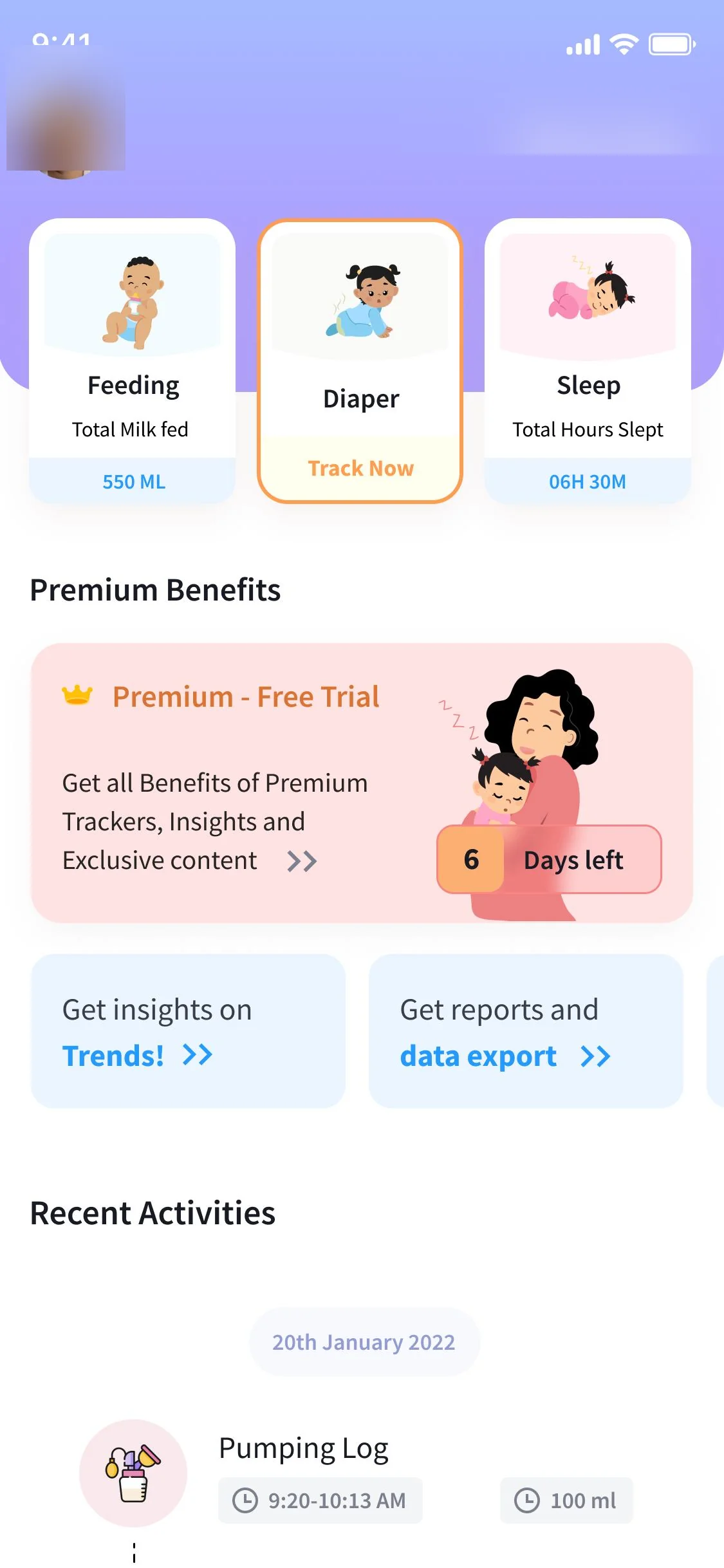
Baby Care Trackers home screen showing feeding, sleep, diaper and growth cards
The tracker home gave parents one-tap access to the four core trackers.Source: slide2, p16

The product ran inside a 5M-install parenting platform where users were already seeking content, community and commerce. By embedding trackers directly in the app, we could reduce context-switching and capture behaviour data that made the rest of the platform more useful.

2. The Problem

New parents face three overlapping pressures:

  • Information overload. Sleep deprivation makes it hard to remember when the baby last fed, slept or had a diaper change.
  • Fragmented tools. Many parents used Notes apps, spreadsheets or multiple single-purpose apps, so the record was never in one place.
  • Coordination friction. Partners, grandparents and helpers all needed updates, but the parent usually became the single source of truth.
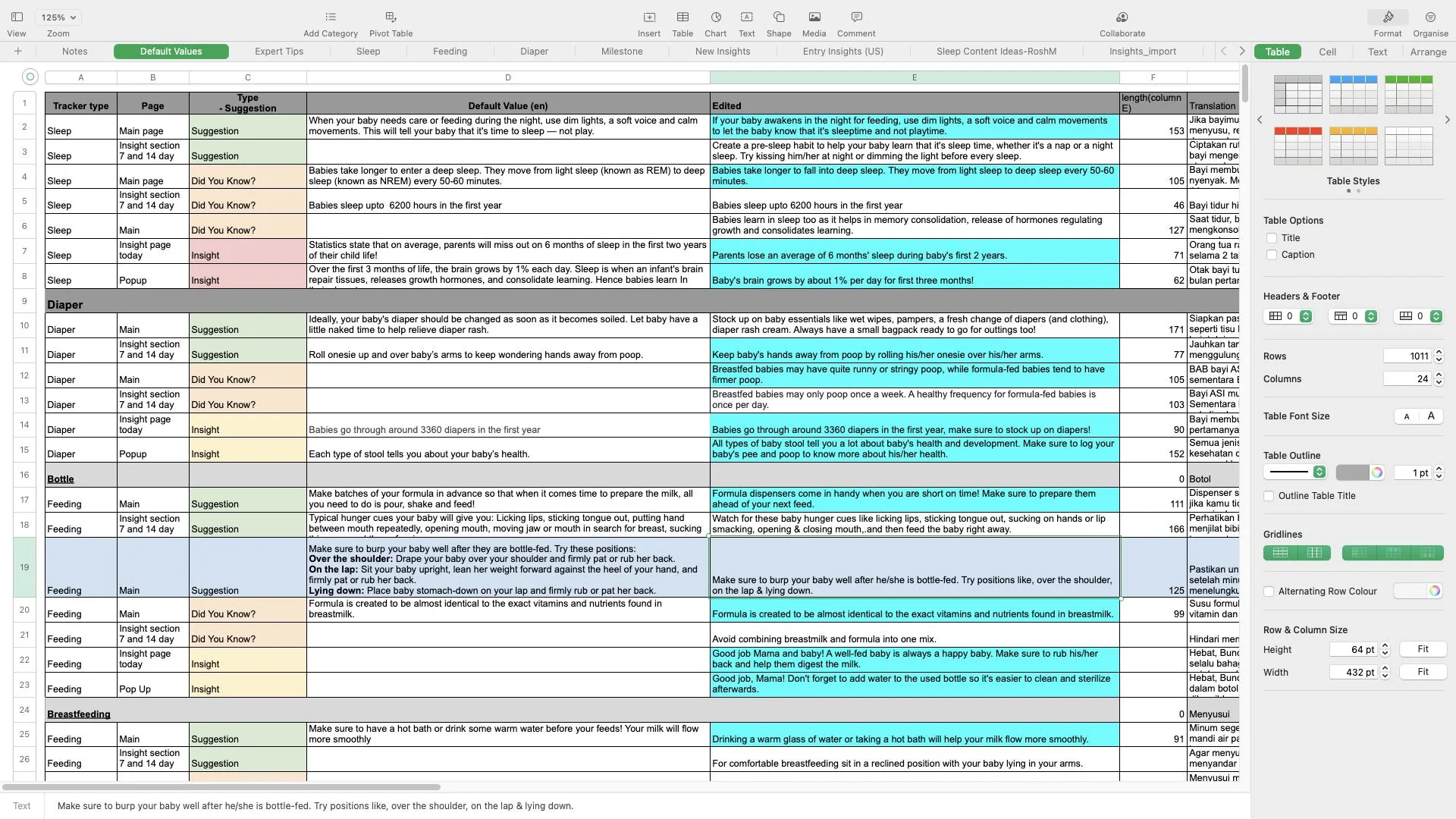
Content spreadsheet mapping tracker insights to parent concerns
We mapped tracker content to the worries parents voiced most often, so the tool could answer questions instead of just storing data.Source: slide2, p17
View text description

A working spreadsheet with one row per content moment, grouped by tracker (Sleep, Diaper, Feeding, Breastfeeding) and page (Main, Insight section, Popup). Columns hold a content type (Suggestion, Did You Know, Insight), a default English copy draft, an edited/localized version, and a translation. Examples: a Sleep suggestion on dim lights and calm movements at night; a Diaper 'Did You Know' on breastfed vs. formula-fed stool differences; a Feeding suggestion on burping positions after bottle-feeding. The sheet is how research findings about parent worries were turned into specific in-app copy.

The hypothesis was simple: if theAsianparent could capture these daily rhythms natively, parents would return more often and trust the platform as a parenting companion, not just a content feed.

3. Research

3.1 Interviews and Segments

We ran 7 semi-structured interviews with parents across four segments:

  • New — first-time parents still building routines.
  • In-Trial — parents comparing theAsianparent to other apps.
  • Free — existing users on the free tier.
  • Paid — subscribers with higher engagement.

The interviews surfaced a consistent pattern: parents did not want more data entry; they wanted reassurance that their baby was on track and a simple way to share that story with others.
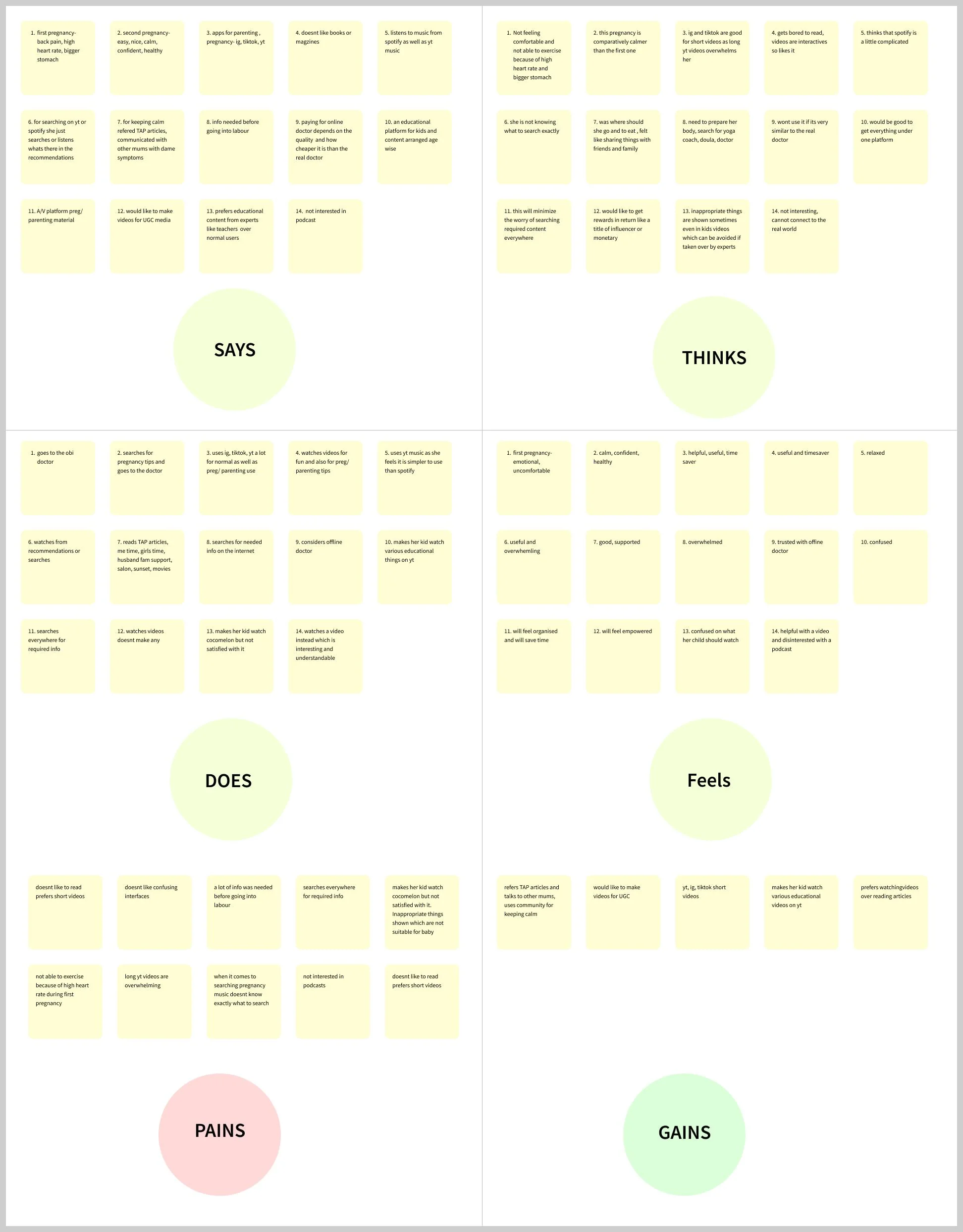
Empathy map summarising what new parents think, feel, say and do
Empathy map synthesising parent thoughts, feelings, actions and pain points.Source: slide2, p19
View text description

Four-quadrant empathy map for a parent persona. Says: pregnancy felt easier the second time; prefers parenting content on Instagram/TikTok over books or magazines; listens to music via Spotify/YouTube; wants an educational platform arranged by age; prefers expert-made video/UGC over regular-user content; not interested in podcasts. Thinks: often unsure exactly what to search for; wants to stop hunting across scattered sources; worried that inappropriate content sometimes surfaces in kids' videos; wants everything under one platform. Does: sees an OB doctor; searches pregnancy tips across Instagram, TikTok and YouTube; reads TAP articles; lets her kid watch YouTube/Cocomelon but isn't fully satisfied with it. Feels: emotional and uncomfortable during a first pregnancy, calmer and more confident by a second; finds existing resources useful but sometimes overwhelming; confused about what her child should watch; would feel organised and empowered with one trusted source.

3.2 Affinity Themes

The research crystallised into five themes:

  1. Feeding & nutrition — timing, quantity, breast vs formula, allergies.
  2. Sleep & routine — naps, wake windows, sleep associations.
  3. Health & well-being — temperature, medication, symptoms, vaccinations.
  4. Growth tracking — weight, height, milestones.
  5. Communication & support — sharing logs with partners, helpers and doctors.
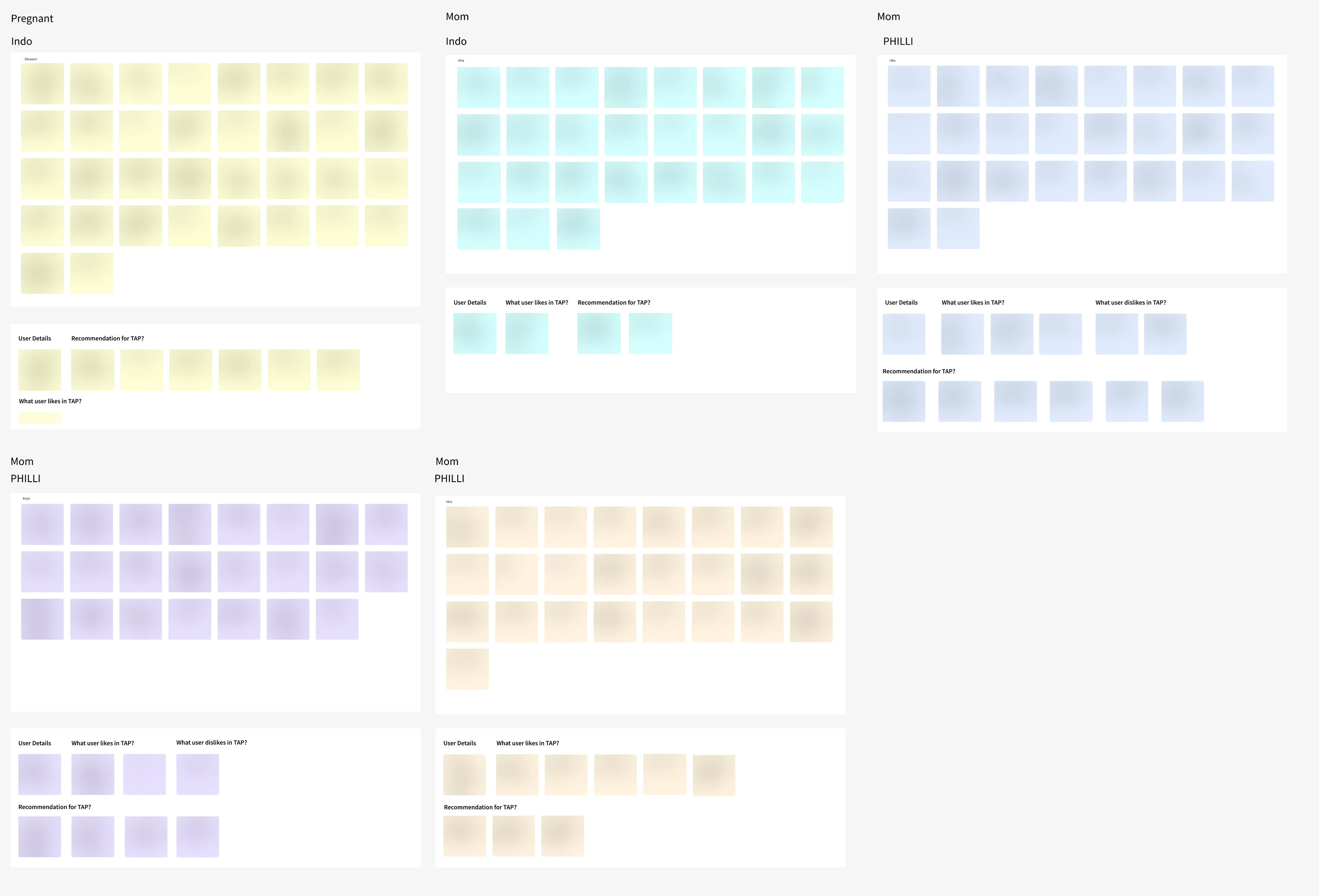
Affinity map grouping parent needs into feeding, sleep, health, growth and support themes
Affinity map grouping parent needs into the five themes that shaped the tracker scope.Source: slide2, p19
View text description

Affinity-mapping board clustering individual interview notes (masked/anonymized in the source deck) into three persona segments — Pregnant (Indonesia), Mom (Indonesia), and Mom (Philippines) — each broken into sub-groups: User Details, What the user likes about TAP, What the user dislikes about TAP, and Recommendations for TAP. This clustering exercise is what produced the five thematic groups used to scope the tracker: feeding, sleep, health, growth and support.

3.3 Personas

Three personas guided prioritisation:
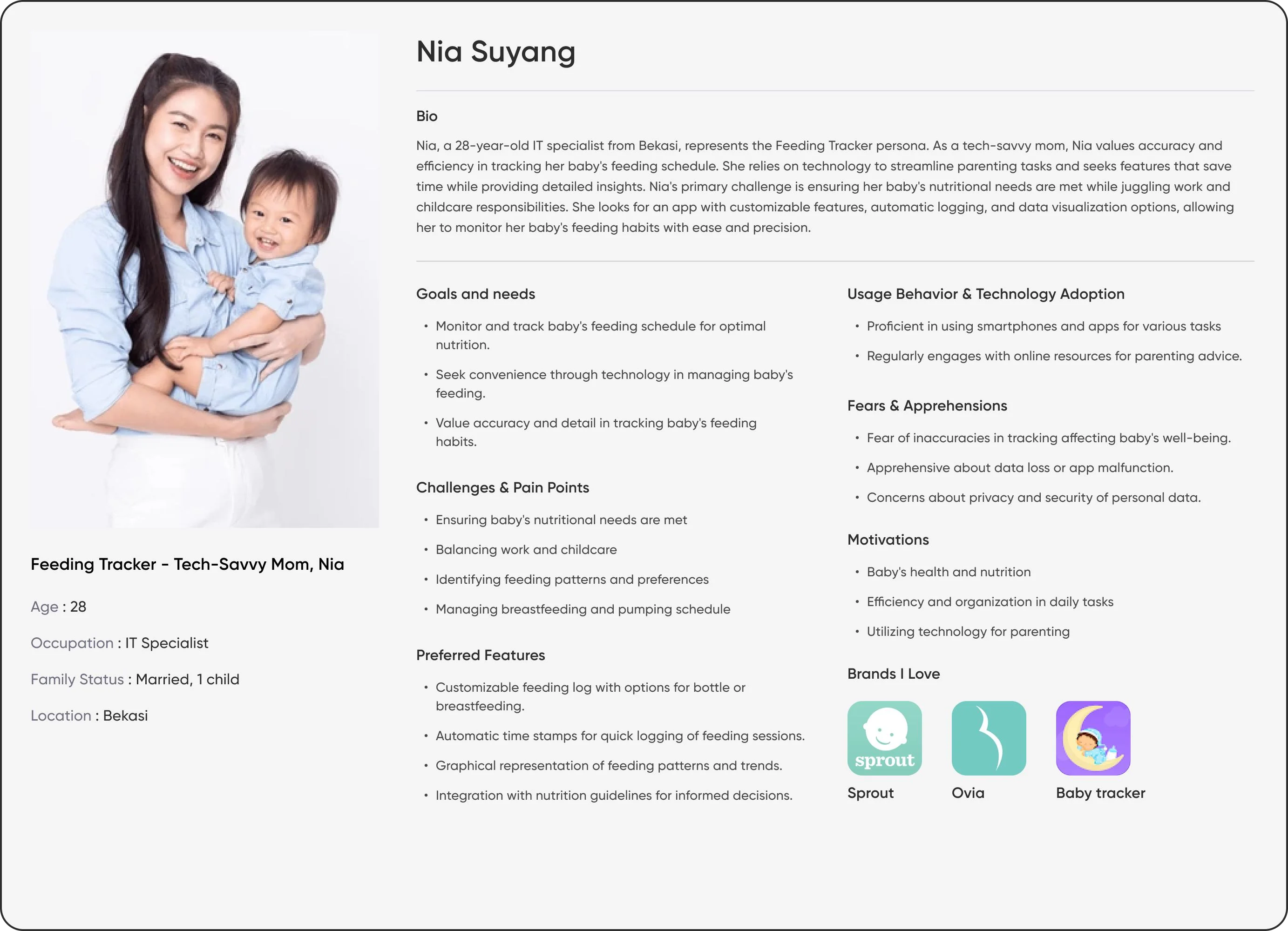
Persona card for Nia Suyang, Tech-Savvy Mom
Nia Suyang — Tech-Savvy Mom. Comfortable with apps and expects smart defaults and shortcuts.Source: slide2, p19
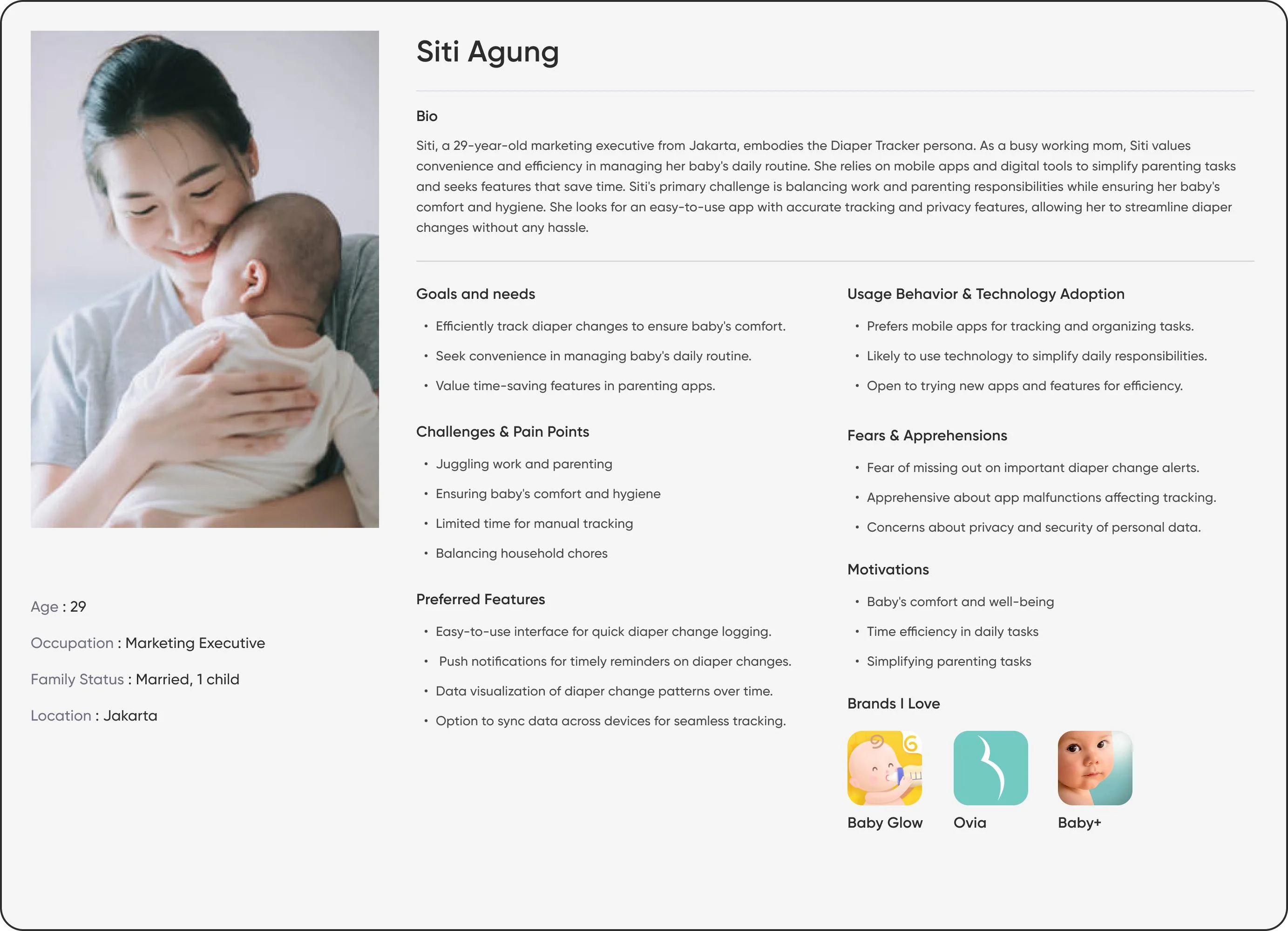
Persona card for Siti Agung, Busy Working Mom
Siti Agung — Busy Working Mom. Needs quick logging and visibility for caregivers while she is at work.Source: slide2, p19
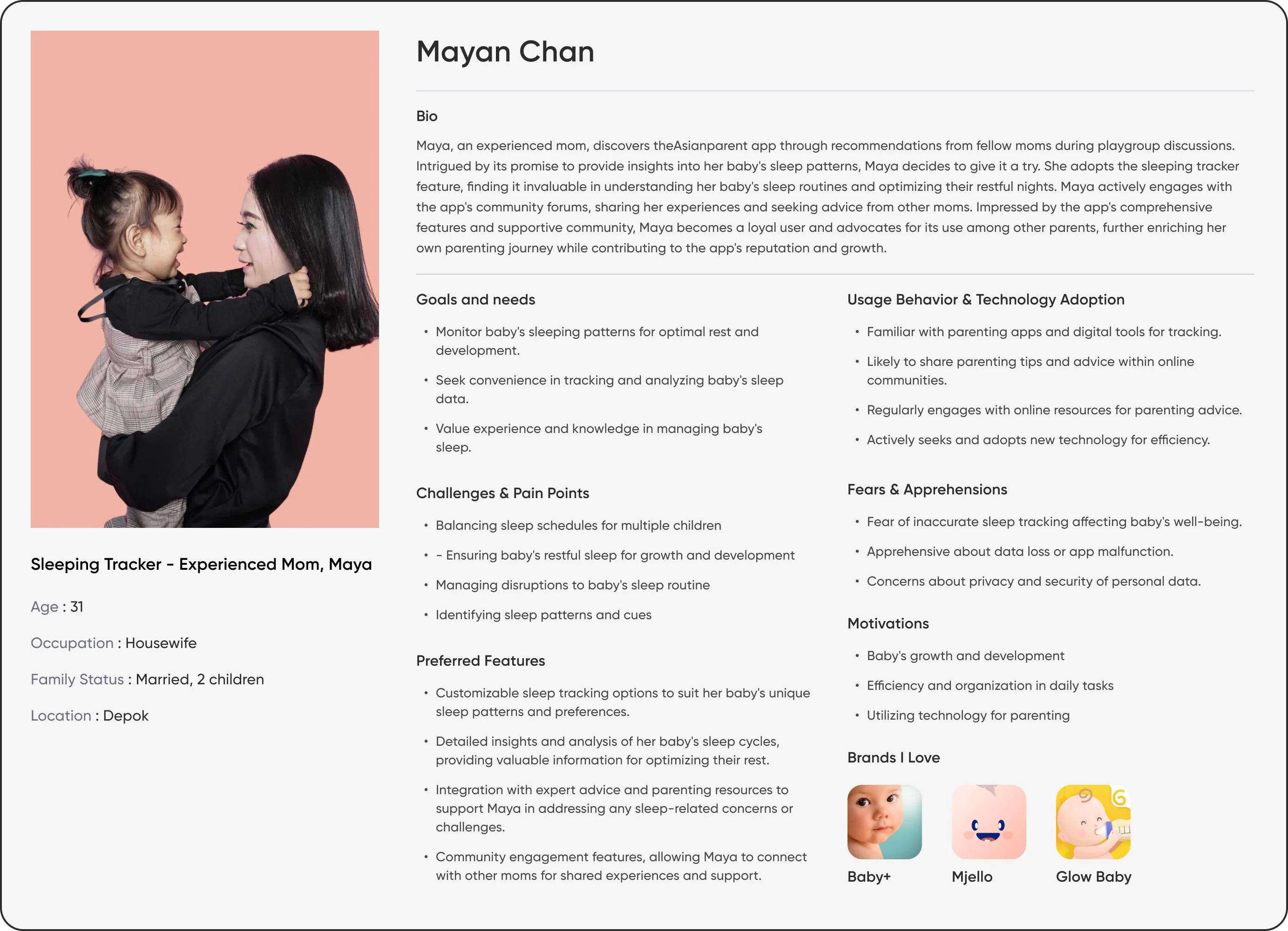
Persona card for Mayan Chan, Experienced Mom
Mayan Chan — Experienced Mom. Uses trackers selectively and values context over raw numbers.Source: slide2, p19

4. Design Solution

The design covered four trackers, each tuned to a different parenting need:

  • Feeding — breast/bottle/solid logging with quantity and duration.
  • Sleep — start/end timers, nap and night summaries, insight sheets.
  • Diaper — quick logging by type and time.
  • Growth — weight, height and milestone snapshots.
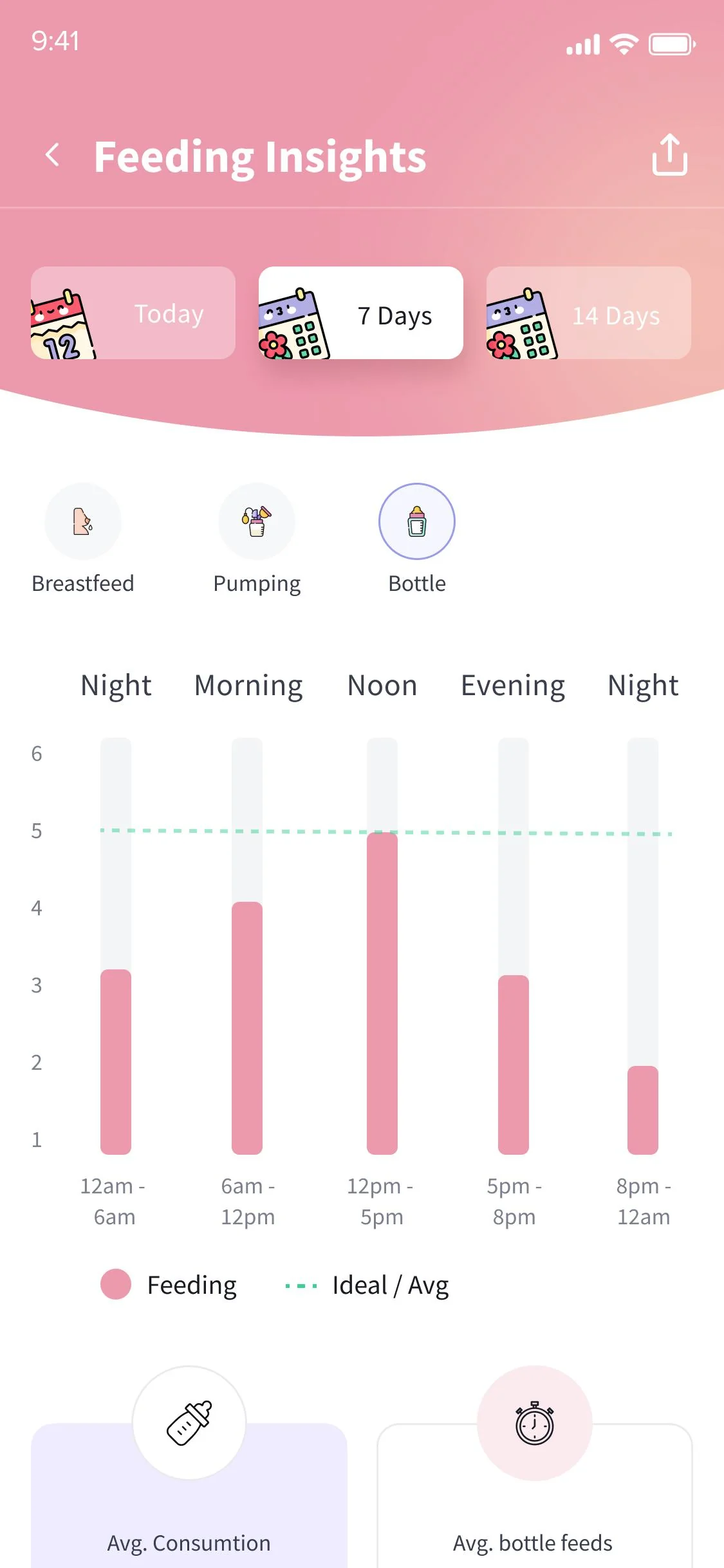
Feeding tracker insights screen showing patterns and summaries
Feeding insights turned daily logs into pattern summaries parents could act on.Source: slide2, p16
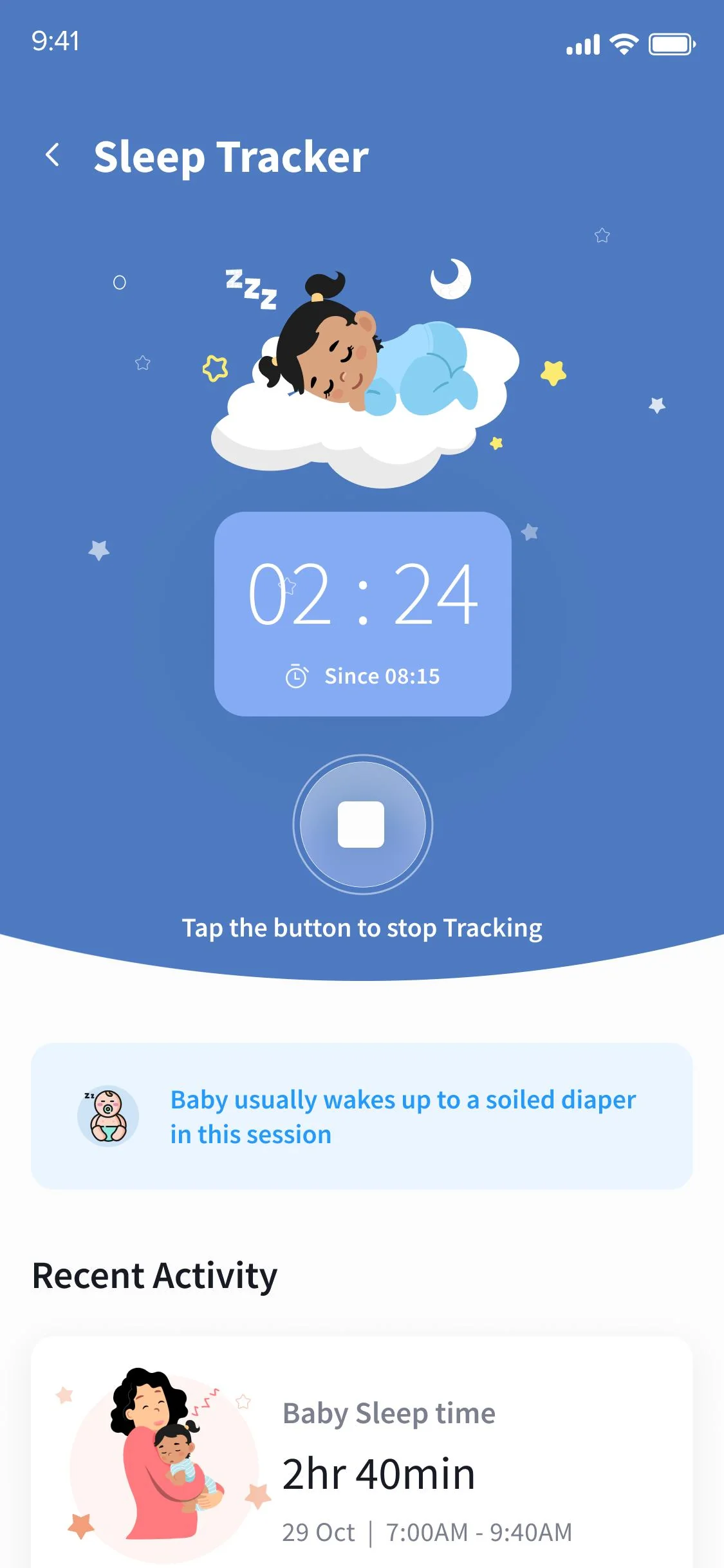
Sleep timer screen
The sleep timer used a single-tap start/stop pattern optimised for one-handed use.Source: slide2, p16
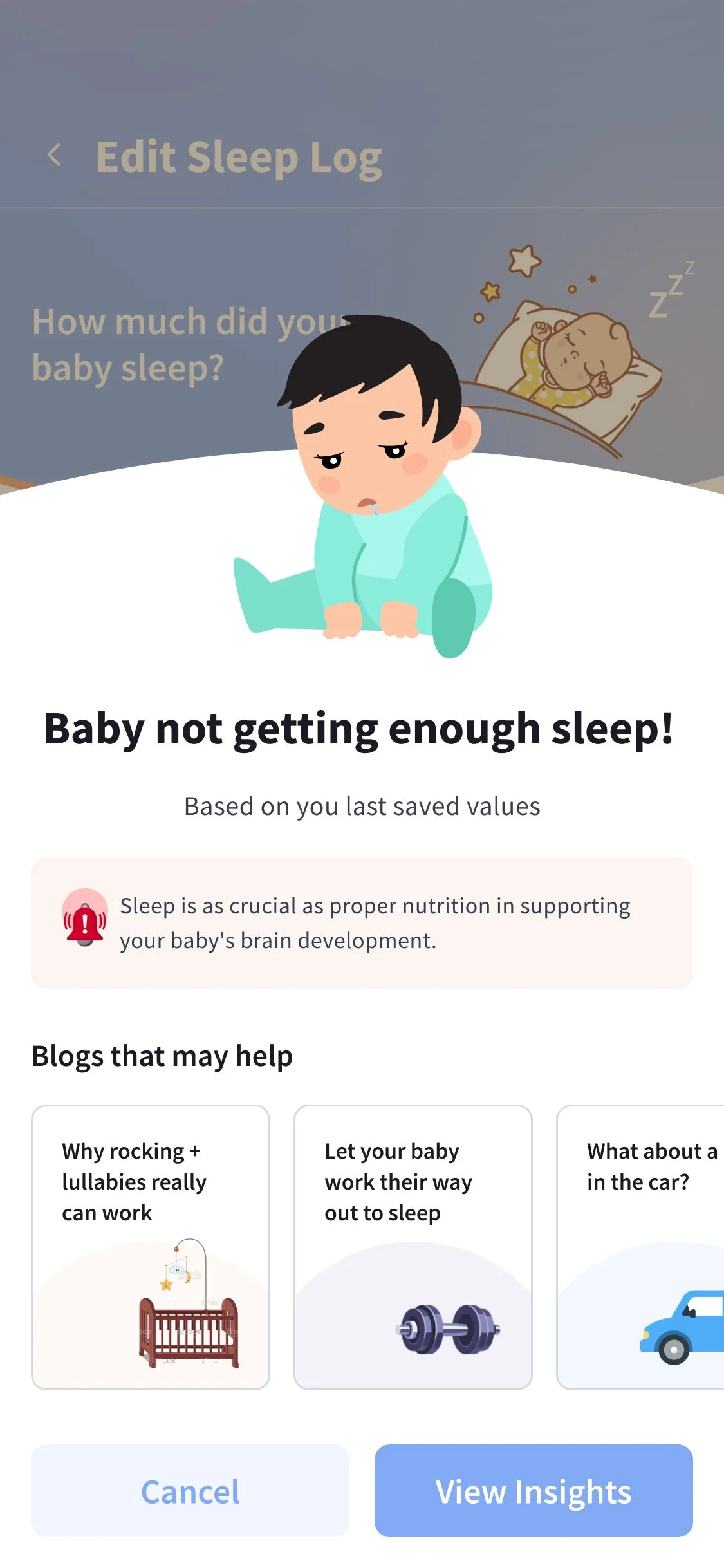
Sleep insight sheet with trends and summaries
Sleep insight sheets translated raw timers into trends parents could discuss with paediatricians.Source: slide2, p16
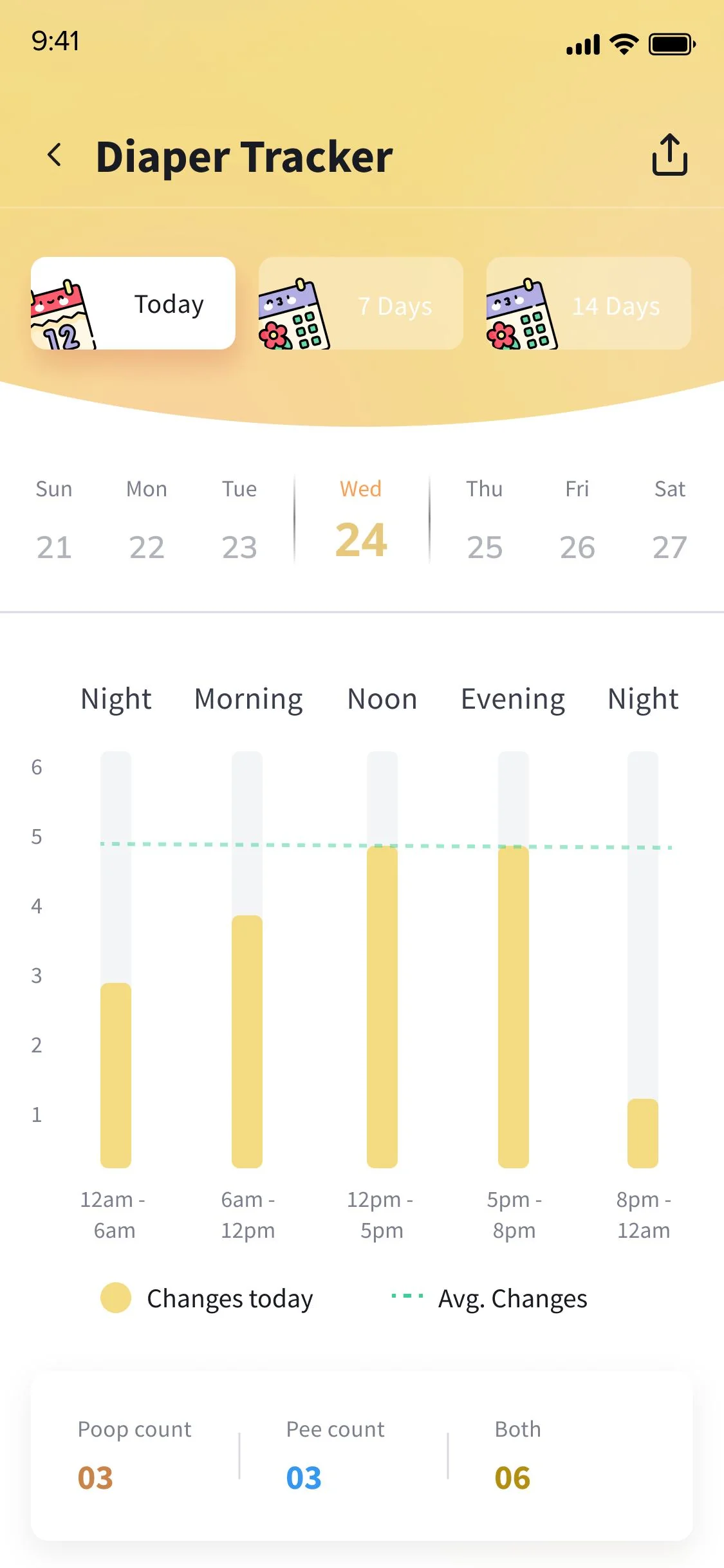
Diaper tracker screen
Diaper tracking was deliberately minimal: type, time and optional notes.Source: slide2, p16
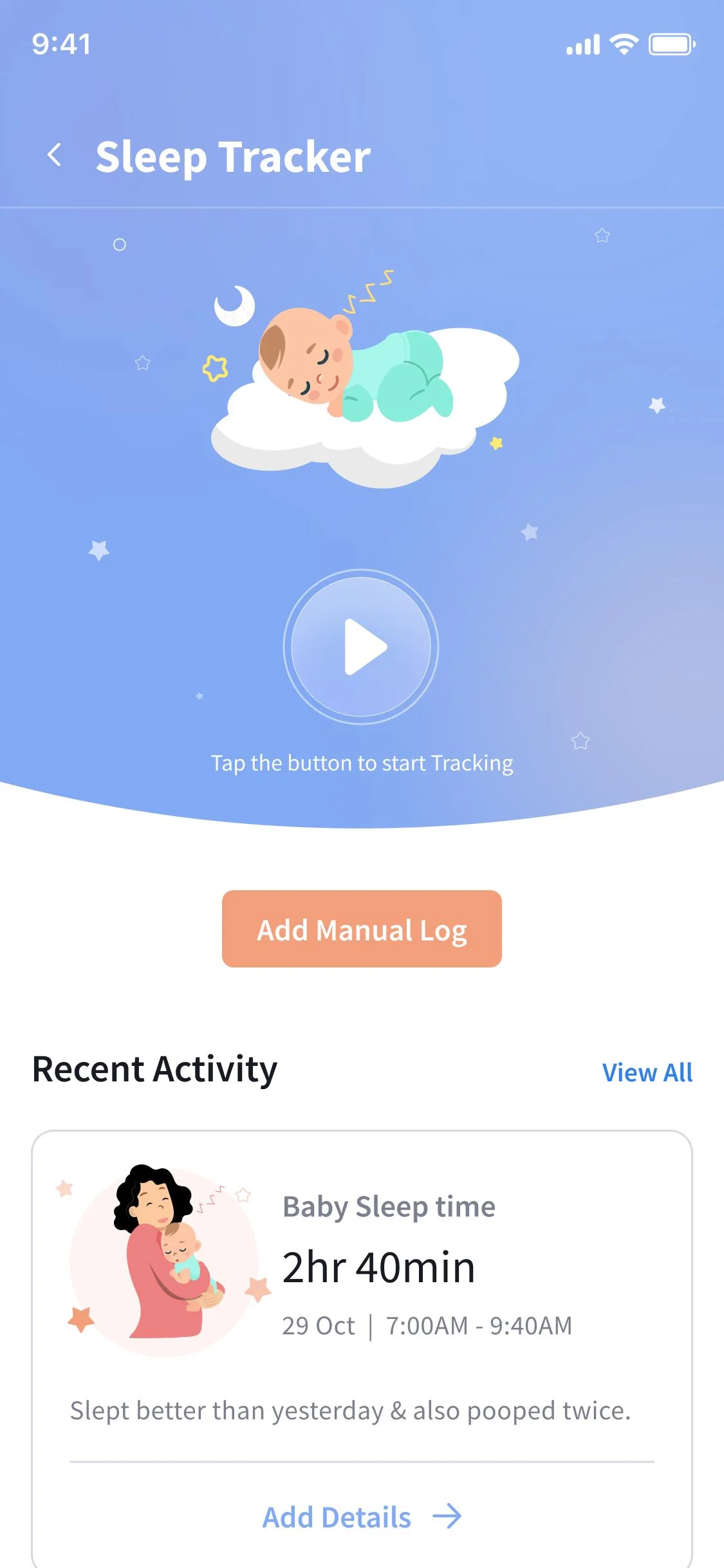
Sleep tracker idle state
Idle states used reassuring copy and clear CTAs so the screen never felt empty or broken.Source: slide2, p16

5. Usability Testing

We usability-tested the onboarding and first tracker creation flow. The design was learnable overall, but one friction point stood out: first-time users struggled to create their first tracker group. They understood what each tracker did, but were unsure how to combine them into a routine.
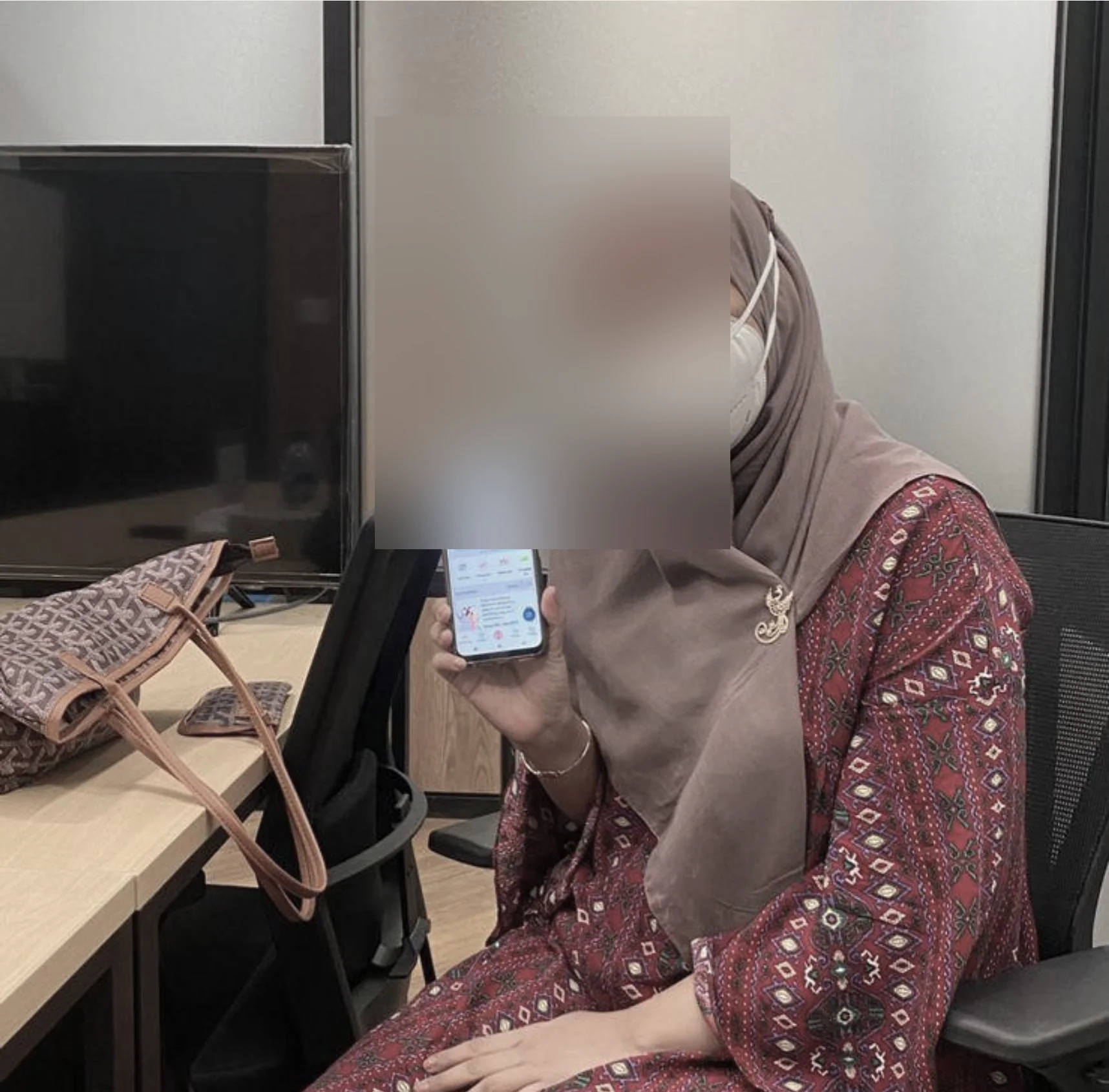
Photo from a moderated usability testing session, participant's face blurred for privacy
Usability notes highlighted the first-tracker-group creation step as the main drop-off point.Source: slide2, p21
View text description

Photograph from a moderated usability session: a participant, face blurred for privacy, seated at a desk holding a smartphone showing the tracker app's onboarding screen. The session was used to observe where she paused or hesitated while setting up her first tracker group.

The fix was to add dashboard coach marks and a guided first-tracker setup that pre-selected a common routine (feed → sleep → diaper) parents could edit rather than build from scratch.

6. Impact

Baby Care Trackers reached 382,042 unique users.
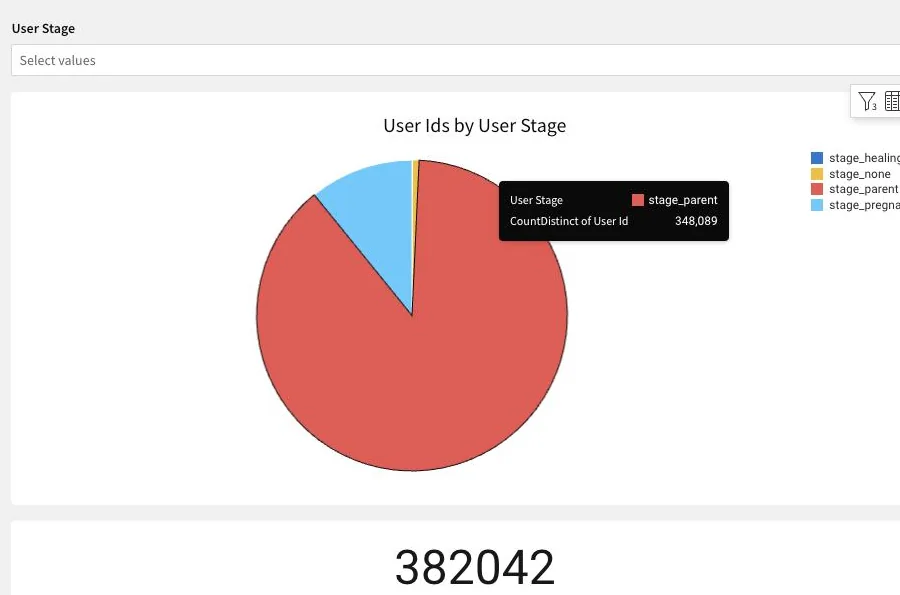
Impact dashboard showing 382,042 unique users
382,042 unique users adopted the trackers.Source: slide2, p22

Per-tracker usage showed which behaviours parents valued most:

TrackerUsers
Diaper238,614
Feeding237,241
Sleep176,948
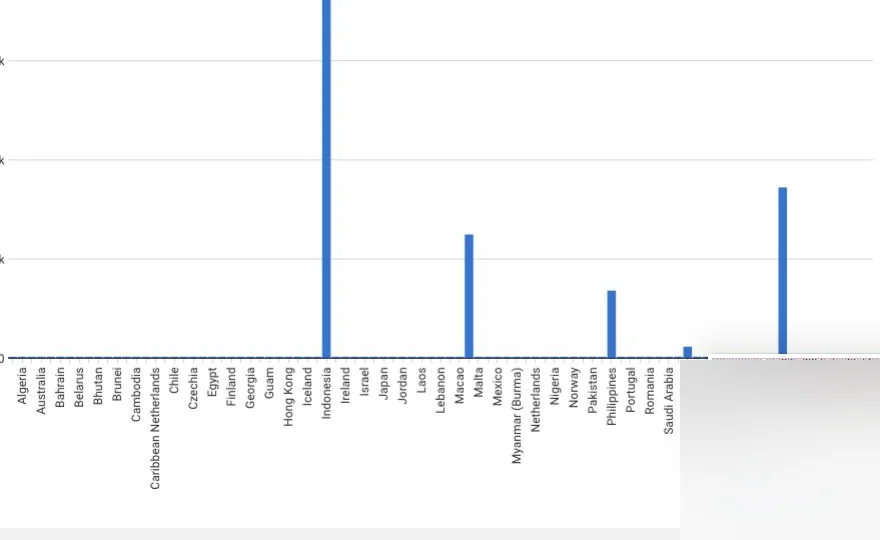
Country distribution chart for tracker users
Usage was distributed across SEA markets, with the strongest adoption in the app's core countries.Source: slide2, p22
View text description

Bar chart of tracker users across roughly 40 listed countries. Indonesia dominates with a bar many times taller than every other country. A handful of countries in the middle of the alphabetical list (in the Macao–Philippines–Saudi Arabia range) show small but visible secondary bars; every other listed country — including Australia, Japan and most European markets — is close to zero. This confirms Indonesia as the core market with a few secondary pockets of adoption elsewhere in the region.

The numbers confirmed the core bet: parents wanted a single, lightweight place to log the basics. Diaper and feeding trackers outperformed sleep, which suggested an opportunity to make sleep onboarding even simpler.

7. Second-Order Thinking

  • Data as a personalisation engine. Tracker data made content recommendations more timely — for example, surfacing sleep articles when a user's logs showed short naps.
  • Healthcare adjacency. A shareable, timestamped log is valuable in paediatric visits. The next iteration could export a summary or integrate with clinic booking flows.
  • Retention loop. Parents who logged consistently had higher session frequency than those who only consumed content, because the tracker created a reason to reopen the app multiple times a day.

8. Third-Order Thinking

  • Platform trust. If tracker data is handled transparently, it deepens trust; if it is over-monetised or shared unexpectedly, it risks the exact trust the product is built on.
  • Caregiver networks. As the tracker becomes a shared record, theAsianparent could become the coordination layer for an extended family's care routine, not just the mother's app.
  • Longitudinal value. The first-year log is a high-switching-cost dataset. Done well, it creates a natural bridge from pregnancy content into toddlerhood and commerce.

Wo dieses Projekt in meinen Werdegang passt

Product Manager, Mobile Apps — Growth & Monetisation / Product Design Consultant
The Parent Inc + Reckitt (ENFA & Durex) · Mar 2021 → May 2023
Den vollständigen Werdegang ansehen
← PreviousMobile Growth & Monetisation — theAsianparent
Next →theAsianParent — Email & Mobile Verification
Ólafur Arnalds & BonoboLoomMayank Lakhani — Produktmanager und AI Builder